
What are the qualities of a Security Officer?

A good security officer possesses several key qualities: Vigilance Remains alert and attentive to detect potential threats or suspicious activities. Integrity Demonstrates honesty and strong moral principles, ensuring trustworthiness in handling sensitive information. Communication Skills Clearly and effectively communicates with colleagues, the public, and law enforcement. Problem-Solving Skills Quickly assesses situations and makes sound decisions to resolve issues. Physical Fitness Maintains good physical condition to handle the demands of the job and respond effectively in emergencies. Attention To Detail Notices and accurately reports minor details that could indicate larger security issues. Patience And Composure Stays calm under pressure and manages stressful situations effectively. Professionalism Adheres to protocols, maintains a neat appearance, and represents the organization positively. Technical Proficiency Uses security systems and technology effectively, such as surveillance equipment and alarm systems. Teamwork Works well with others, including fellow security personnel and emergency responders, to ensure a coordinated approach to security. These qualities help ensure that a security officer can perform their duties effectively and maintain a safe and secure environment. Certificate II in Security Operations Star Training Academy is an approved training provider for this course in New South Wales. Training schedules are posted on the website and more information is available by Phone (+61 02 9897 5622) and on-campus (27A South Street, Granville NSW 2142) enquiry.
Security Operations Course – Screening Procedures as a Security

Security guards who have received Star Training Academy training are authorised to perform searches and security-maintenance screenings. To guarantee that they are used properly and equitably, these powers are, nevertheless, subject to rules and regulations. Under NSW legislation, the following are some essential components of security officer search and screening procedures: Authority When security measures are judged necessary, security officials have the right to search and check everyone accessing specific locations or events. Consent Before conducting a search, security personnel are typically required to get the subject’s permission. The person is free to decline consent, but doing so could prevent them from being allowed admission into the building. Search Methods Security personnel may employ a range of search techniques, such as pat-downs, bag inspections, and the deployment of portable metal detectors. These techniques, which are intended to identify weapons or forbidden goods, are often non-intrusive. Private Spaces Unless there is a compelling reason to do so, searches are normally restricted to public locations and may not include a person’s personal property or belongings. Professional Conduct In order to protect a person’s privacy and dignity during a search, security personnel are obliged to act professionally and respectfully. Prohibited Items The main responsibility of security personnel is to locate and stop the admission of objects that are prohibited, including weapons, potentially harmful objects, illegal substances, and items that could endanger public safety. Privacy Considerations Any personal information gathered during a search should be treated with confidentiality, and search operations should be carried out covertly. Recording To ensure accountability and openness, certain security operations may record or document the search procedure. Legal Rights People are entitled to information about the purpose of the search, the name of the security guard, and whether or not the guard is associated with the business. Redress A person has the right to notify the appropriate authorities of a search as soon as they believe it was done unlawfully or in violation of their rights. Star Training provides security officers with training that teaches them to respect people’s rights, obey the law, and keep a safe environment. See the appropriate authorities or legal resources if you need specific information about security search and screening protocols in a certain situation. Certificate II in Security Operations Star Training Academy is an approved training provider for this course in New South Wales. Training schedules are posted on the website and more information is available by Phone (+61 02 9897 5622) and on-campus (27A South Street, Granville NSW 2142) enquiry.
Security Training: A Guide to Obtaining Your National Competency Card in Australia

Are you looking to work as a security officer in Australia? If so, then you must obtain a nationally recognized certificate that proves your competency in the field. The good news is, there are several training courses available in Australia that can help you achieve this. In this article, we’ll take a closer look at what you need to know to obtain your national competency card and become a certified security professional. What is a Unit of Competency? A unit of competency is a standardized measurement of an individual’s skills and knowledge in a specific area of work. In the security industry, a unit of competency refers to the minimum level of competency that must be demonstrated by security officers in order to work in their field. What are the Different Types of Security Training Available in Australia? There are several types of security training available in Australia, including the RSA (Responsible Service of Alcohol) competency card, RCG (Responsible Conduct of Gambling) competency card, and NSW competency card. Each of these courses focuses on a specific area of security work, such as serving alcohol, working in a gaming environment, or working as a security officer in New South Wales. How Do I Obtain My National Competency Card? To obtain your national competency card in Australia, you need to complete a security training course and follow these steps: Choose a registered training organization (RTO) that offers security training courses that are recognized by the relevant government bodies. Complete the chosen security training course and obtain an interim certificate. Hold the interim certificate for a minimum of 90 days. During this time, you must work in the security industry under the supervision of a licensed security officer. After holding the interim certificate for 90 days, you can apply for your national competency card at a Service NSW office. To apply, you will need to provide proof of your identity, your interim certificate, and any other required documentation. The application fee must also be paid. Once your application has been processed and approved, you will receive your national competency card, which is valid for five years. Please note that the importance of holding a valid interim certificate for 90 days cannot be emphasized enough. This period allows you to gain experience and demonstrate your competence in the security industry before obtaining your national competency card. Please Note: You must hold a valid interim certificate for at least 90 days before you can apply for your national competency card. What is a Registered Training Organization (RTO)? A registered training organization (RTO) is an organization that has been approved by the government to provide training and assessment services in a specific area of work. In the security industry, RTOs are responsible for delivering security training courses and issuing certificates to individuals who have completed the courses. What is the RSA Competency Card? The RSA competency card is a certificate that proves an individual’s competency in responsible service of alcohol. If you plan to work in a bar, restaurant, or any other establishment that serves alcohol, you must obtain an RSA competency card. What is the RCG Competency Card? The RCG competency card is a certificate that proves an individual’s competency in responsible conduct of gambling. If you plan to work in a gaming environment, such as a casino or a gaming room, you must obtain an RCG competency card. What is the NSW Competency Card? The NSW competency card is a certificate that proves an individual’s competency in working as a security officer in New South Wales. If you plan to work as a security officer in NSW, you must obtain a NSW competency card. In conclusion, obtaining a national competency card is an important step in becoming a certified security professional in Australia. Whether you’re working in the hospitality industry, a venue offering gambling services, or any other type of security setting, a national competency card demonstrates your competency in the field and your commitment to performing your duties effectively and safely. There are several different types of security training available in Australia, each focusing on a specific aspect of the security industry. We encourage you to explore the different courses available and choose the one that best suits your needs and career goals. Becoming a certified security professional is an excellent way to start or advance your career in the security industry. With the right training and a national competency card, you’ll be well-prepared to perform your duties with confidence and competence. So, take the first step today and explore the security training courses available in Australia!
Traffic Controller (TCR) and Implement Traffic Control Plans (IMP) Training Course – Key Components

Traffic Control Training is essential for individuals who are involved in directing and managing traffic around construction sites, roadworks, or any other situations where normal traffic flow is disrupted. This training ensures that traffic controllers can effectively and safely manage traffic, protecting both the workers and the public. Key Components of Traffic Control Training Legal and Regulatory Requirements Understanding local laws and regulations related to traffic control. Knowledge of relevant standards and guidelines. Traffic Control Plans Designing and implementing effective traffic control plans. Understanding the principles of traffic management and flow. Safety Procedures Ensuring personal safety and the safety of others. Using personal protective equipment (PPE) correctly. Communication Skills Effective communication with drivers, pedestrians, and other workers. Using hand signals, signs, and other communication tools. Setting Up and Dismantling Traffic Control Devices Proper placement and removal of traffic cones, barriers, signs, and other control devices. Ensuring visibility and clarity of traffic control measures. Emergency Procedures Responding to accidents and emergencies. Implementing contingency plans for unexpected situations. Star Training Academy is an approved training provider for this course in New South Wales. Training schedules are posted on the website and more information is available by Phone (+61 02 9897 5622) and on-campus (27A South Street, Granville NSW 2142) enquiry.
Start Your Construction Career Today: White Card Training in Liverpool

In the bustling city of Liverpool, opportunities in the construction industry abound. With numerous projects underway and many more on the horizon, there has never been a better time to embark on a career in construction. Whether you’re a seasoned professional looking to advance your skills or someone entirely new to the field, obtaining a White Card is the first step towards unlocking a world of possibilities in construction. In this article, we’ll explore what White Card training entails, why it’s essential, and how you can kickstart your construction career in Liverpool. What is a White Card? A White Card, formally known as the General Construction Induction Card, is a nationally recognized certification required for anyone seeking to work on a construction site in Australia. It signifies that the holder has completed the necessary training to understand and implement essential safety measures on construction sites, ensuring the well-being of themselves and their colleagues. The Importance of White Card Training Safety is paramount in the construction industry. With its inherently hazardous nature, construction sites pose various risks to workers if proper precautions are not taken. White Card training equips individuals with the knowledge and skills needed to identify potential hazards, assess risks, and implement appropriate safety measures. By completing this training, workers not only protect themselves but also contribute to creating safer work environments for everyone involved in construction projects. What Does White Card Training Cover? White Card training covers a range of essential topics related to construction site safety, including: Work Health and Safety (WHS) Laws: Understanding the legal obligations and responsibilities regarding workplace health and safety. Risk Management: Identifying potential hazards and implementing strategies to mitigate risks effectively. Construction Site Hazards: Recognizing common hazards found on construction sites, such as falls, electrical hazards, and hazardous substances. Emergency Procedures: Knowing how to respond to emergencies, including fire evacuations and first aid procedures. Personal Protective Equipment (PPE): Understanding the importance of wearing appropriate PPE and how to use it correctly. Why Choose White Card Training in Liverpool? Liverpool, with its vibrant construction industry, is an ideal location to pursue White Card training for several reasons: Abundant Opportunities: Liverpool is home to numerous construction projects, ranging from infrastructure development to residential and commercial building projects. With a high demand for skilled workers, obtaining a White Card opens doors to a multitude of job opportunities in the area. Quality Training Providers: Liverpool boasts reputable training providers offering comprehensive White Card courses conducted by experienced industry professionals. These courses are designed to equip participants with the knowledge and skills necessary to thrive in the construction sector. Networking Opportunities: Attending White Card training in Liverpool allows individuals to network with fellow participants as well as industry professionals. Building connections within the local construction community can lead to valuable career opportunities and collaborations in the future. How to Get Started Getting started on your construction career journey in Liverpool is simple: Research Training Providers: Look for accredited training providers in Liverpool offering White Card courses. Ensure that the provider is reputable and recognized by relevant industry authorities. Enroll in a Course: Once you’ve selected a training provider, enroll in a White Card course that fits your schedule and preferences. Courses may be available in-person or online, providing flexibility to accommodate different learning styles. Attend and Complete the Course: Attend all training sessions and actively participate in learning activities. Be prepared to absorb valuable knowledge and practical skills that will serve you well in your construction career. Obtain Your White Card: Upon successful completion of the course, you will receive your White Card certification. Keep this card safe and readily accessible whenever you’re working on a construction site. Frequently Asked Questions (FAQs) Q: What is a White Card, and why do I need it? A: A White Card, also known as the General Construction Induction Card, is a mandatory certification for anyone working on Australian construction sites. It signifies completion of essential safety training, ensuring you understand and implement proper safety measures to protect yourself and others. Q: How do I obtain a White Card? A: To obtain a White Card, you must complete an accredited training course with a registered training provider. These courses cover topics such as work health and safety laws, risk management, and construction site hazards. Q: Is White Card training available online? A: Yes, many training providers offer White Card courses online, providing flexibility for learners to complete the training at their own pace and convenience. Q: How long does White Card training take? A: The duration of White Card training varies depending on the provider and delivery mode. Typically, the course can be completed in one day, either through face-to-face training or online learning. Q: Is the White Card certification valid nationwide? A: Yes, the White Card certification is nationally recognized and valid across all Australian states and territories, allowing you to work on construction sites anywhere in the country. Conclusion In Liverpool’s dynamic construction industry, a White Card is your ticket to a rewarding and fulfilling career. By investing in White Card training, you not only prioritize your safety but also position yourself for success in one of Australia’s most thriving sectors. Take the first step towards a brighter future today by enrolling in White Card training in Liverpool and unlocking the doors to endless opportunities in construction. Should you have any questions or concerns, please do not hesitate to contact us at (02) 9897 5622 or info@startraining.edu.au
Obtaining an RSA Certification in NSW – Responsible Service of Alcohol

How to Obtain RSA Certification Enroll in an Approved Course RSA courses are offered by accredited training organizations such as Star Training Academy in Granville 2142 and Liverpool 2170. Course schedule and details are available on this website and by enquiring on-campus and over the phone. Complete the Training Courses typically include both theoretical and practical components, followed by an assessment. Receive Certification Upon successful completion, participants receive an RSA certificate, which is often required to be renewed periodically. Star Training Academy will provide the interim certificate that a participant requires in applying for an RSA Competency Card with Service NSW. Regional Requirements The specifics of RSA training can vary by region, including the course content, duration, and certification process. It’s important to check the local requirements where you plan to work. Star Training Academy is an approved training provider for this course in New South Wales. Training schedules are posted on the website and more information is available by Phone (+61 02 9897 5622) and on-campus (27A South Street, Granville NSW 2142) enquiry.
What does first aid course involve?
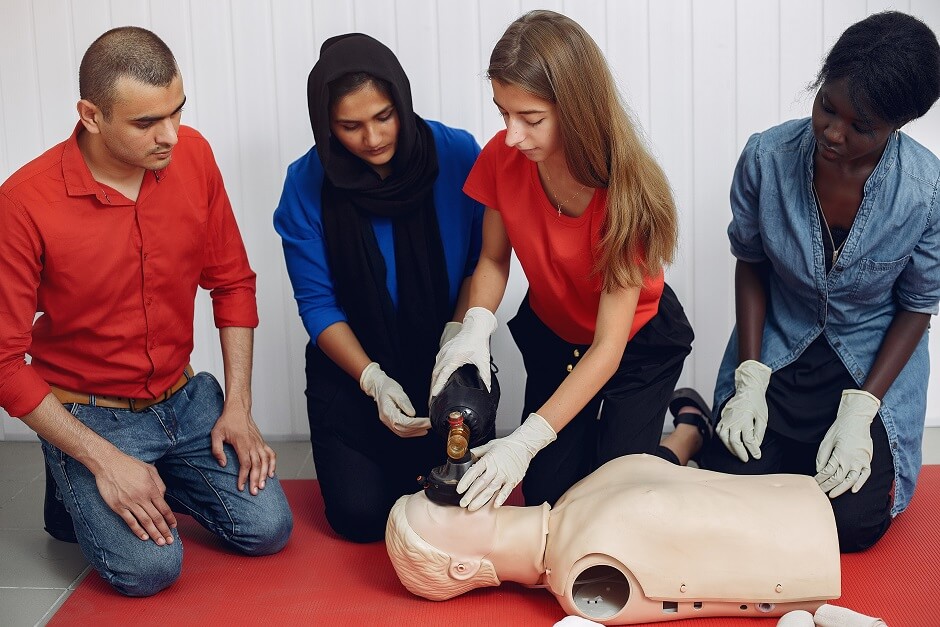
What is first aid course? A first aid course is a program that teaches individuals how to provide initial medical care in the event of an emergency or injury. Topics covered in a typical first aid course include basic life support, such as CPR and the use of an AED (automated external defibrillator), as well as the treatment of common injuries and illnesses, such as cuts, burns, broken bones, and cardiac arrest. The course typically includes both classroom instruction and hands-on training. Certification is usually provided upon completion of the course. First aid courses are offered by many organizations such as start training academy, and local health department. What does HLTAID012 provide? HLTAID012 Provide basic emergency life support, also known as Provide First Aid, is a nationally recognized training course that teaches individuals how to provide initial medical care in emergency situations. The course covers a wide range of topics, including: Basic life support, such as CPR and the use of an AED (automated external defibrillator) The management of breathing and cardiac emergencies The management of injuries, such as cuts, burns, and broken bones The management of sudden illnesses, such as stroke and seizures The correct use of first aid equipment and materials During the course, participants will learn how to assess a casualty’s condition, provide initial treatment, and manage the situation until professional help arrives. The course usually includes a combination of classroom instruction, hands-on training, and assessment. Upon successful completion, participants will receive a statement of attainment recognized under the Australian Qualifications Framework (AQF). Advanced Resuscitation and Oxygen Advanced Resuscitation and Oxygen is a course that builds on the skills and knowledge learned in basic CPR courses. It is typically intended for healthcare professionals, such as nurses, paramedics, and doctors, and covers more advanced techniques for managing cardiac and respiratory emergencies. The course may cover topics such as: Advanced airway management Advanced cardiac life support (ACLS) Use of advanced equipment, such as bag-valve-mask ventilation and supraglottic airways Use of oxygen therapy Management of special populations, such as pediatric and geriatric patients The Australian Resuscitation Council (ARC) is the peak body for resuscitation in Australia, responsible for developing and updating the guidelines for CPR and emergency care. They work closely with other organizations such as the Australian and New Zealand Committee on Resuscitation (ANZCOR) and the Resuscitation Councils of Southern Africa (RCSA). ARC provides training and education for healthcare professionals on resuscitation, CPR and emergency care. Cardiopulmonary Resuscitation (CPR) is an emergency procedure that is used to treat cardiac arrest. It involves chest compressions and rescue breathing to circulate oxygen-rich blood to the brain and other vital organs. It is a life-saving technique that can be performed by anyone with basic training in CPR. The ARC and other organizations offer CPR courses that teach individuals the proper techniques for performing CPR on adults, children, and infants. These courses typically include both classroom instruction and hands-on training, and may lead to certification upon completion. Manage First Aid in an Education and Care Setting is a course that is specifically designed for individuals who work or volunteer in an education and care setting, such as childcare centers, schools, or after-school programs. The course covers the specific first aid needs and requirements of these settings, and includes topics such as: Preparing for and responding to emergency situations Managing injuries and illnesses common in an education and care setting Communicating with parents, guardians, and emergency services Managing and maintaining first aid equipment and supplies The course is typically offered by registered training organizations (RTOs) and may be delivered in a face-to-face format. Some RTOs may also offer online or blended learning options. Upon completion of the course, participants will typically receive a statement of attainment that is recognized under the Australian Qualifications Framework (AQF). Emergency First Aid is a short course that is designed to teach individuals how to provide initial medical care in emergency situations. The course covers basic life support, such as CPR and the use of an AED (automated external defibrillator), as well as the management of injuries and illnesses. This course is usually offered as a face-to-face instruction, including hands-on training. Upon successful completion, participants will receive a statement of attainment recognized under the Australian Qualifications Framework (AQF). Face-to-face aid courses refer to first aid training that is delivered in a traditional classroom setting, where participants receive instruction from a qualified trainer and have the opportunity to practice skills through hands-on training. This type of training is typically offered by registered training organizations (RTOs) and can lead to a first aid qualification. First aid training covers a range of topics, including basic life support, such as CPR and the use of an AED (automated external defibrillator), as well as the management of injuries and illnesses. The training typically includes both classroom instruction and hands-on training, and may lead to certification upon completion. RTOs are organizations that are registered by the Australian government to deliver vocational education and training. They are responsible for developing and delivering training programs, assessing student performance, and issuing qualifications. Many RTOs offer first aid training and can provide information about the specific qualifications and certifications that are available. In addition to training, RTOs may also provide other aid services and resources, such as first aid kits and equipment, training materials, and continuing education opportunities. They may also be able to provide information about workplace compliance and regulations related to first aid. First aid response is the ability to provide immediate and appropriate care to someone who has been injured or is experiencing a sudden illness. This includes assessing the person’s condition, providing initial treatment, and managing the situation until professional help arrives. First aid response skills are taught in first aid courses and are an essential component of emergency preparedness in any setting. What does HLTAID009 Provide? HLTAID009 Provide Cardiopulmonary Resuscitation (CPR) is a nationally recognized training course that teaches individuals how to provide life-saving care in the event of a cardiac arrest. The course covers the following topics: Understanding the causes,
Importance of LLN Test for Certificate II in Security Operations Course

The Language, Literacy, and Numeracy (LLN) test is crucial for the Certificate II in Security Operations course for several reasons: Baseline Competency The LLN test assesses whether candidates have the necessary language, literacy, and numeracy skills to successfully complete the course. This ensures that all participants are capable of understanding and engaging with the course content, which often includes reading manuals, writing reports, and interpreting data. Safety and Compliance In security operations, clear communication and precise understanding of procedures are vital for safety and legal compliance. Adequate LLN skills help ensure that learners can follow security protocols accurately and handle documentation correctly. Effective Learning Strong LLN skills facilitate better comprehension of training materials and practical exercises. This enhances the overall learning experience and allows candidates to grasp complex concepts more easily. Industry Standards The security industry often requires adherence to specific standards and regulations. LLN skills are essential for understanding these requirements and implementing them effectively in real-world scenarios. Career Readiness Employers in the security sector value candidates who possess strong LLN skills, as these are indicative of the ability to perform job tasks efficiently. Passing the LLN test ensures that candidates are better prepared for the demands of the job market. Overall, the LLN test is an essential component of the Certificate II in Security Operations course, as it helps ensure that all learners have the foundational skills needed to succeed both in their training and future security roles. * The LLN Test is offered at the Granville Campus from Mondays to Fridays at 10AM. Please arrive before 10AM and bring 100 points of ID and HLTAID011 Provide First Aid Statement of Attainment. Certificate II in Security Operations Star Training Academy is an approved training provider for this course in New South Wales. Training schedules are posted on the website and more information is available by Phone (+61 02 9897 5622) and on-campus (27A South Street, Granville NSW 2142) enquiry.
All You Should Know About the Granville Security Course at Star Training Academy

Are you trying to find a thorough security course in Granville that will provide you the abilities and information you need to work in the security sector? There is only one place to go: Star Training Academy. We will give you all the details you require regarding the security course offered in Granville. Outline of the Granville Security Course A prominent source of security education in Granville, We offers a selection of programmes tailored to the requirements of aspiring security specialists. The security training provided by Star Training Academy in Granville qualifies you for employment in the security sector and is a nationally recognised credential. The goal of the course is to give you the abilities and information needed to work as a security officer, crowd manager, or security guard. It addresses a variety of subjects, such as conflict resolution, first aid, and communication skills. To give you the best of both worlds, the course is offered using hands-on training. Important Elements of the Course The security course provided by us differs from other programmes in the area in a number of significant ways. They consist of: Nationally Recognized Qualification – The course has been given national recognition and is accredited by the Australian Skills Quality Authority (ASQA). Comprehensive Curriculum – The course includes all the necessary components needed for a career in the security field, such as legal and ethical obligations, communication abilities, emergency protocols, and more. Skilled Instructors – The instructors are highly skilled and have years of security sector expertise. Flexible Learning Choices – The course is flexible and convenient for students because it is taught through a combination of instruction and hands-on training. Job Placement Support – After you complete the course will help you get employment in the security sector by providing job placement aid. Course Structure The following units make up the security course in Granville offers: CPPSEC2101 – Use good communication techniques Employ legal and ethical duties in a security setting, CPPSEC2102 Implement WHS, emergency protocols, and evacuation (CPPSEC2103 CPPSEC2104 – Use risk assessment to choose and conduct out reaction to security risk circumstances CPPSEC2105 – Provide superior services to various security clientele CPPSEC2106 – Use fundamental defence skills to defend yourself and others Give first aid using HLTAID003 Duration and Fees The duration of the security training in Granville is usually 2-3 weeks, depending on your rate of learning. The $850 course fee covers all required textbooks and assessment costs. Conclusion In conclusion, anyone interested in pursuing a profession in the security field may consider enrolling in Star Training Academy in Granville. Aspiring security professionals will find the course to be thorough, adaptable, and nationally acknowledged as the best alternative available. After completing the course, you can be assured in your ability to get employment thanks to skilled instructors and job placement help. Take the first step towards a successful career in the security field by enrolling in the course right away.
Responsible Service of Alcohol (RSA) Training – Key Components

Responsible Service of Alcohol (RSA) training is a mandatory course for individuals who work in the hospitality industry where alcohol is served or sold. This training is designed to equip participants with the necessary skills and knowledge to responsibly serve alcohol, ensuring compliance with legal and regulatory requirements. Key Components of RSA Training Legal Requirements Understanding the laws and regulations related to the sale and service of alcohol. Recognising the legal responsibilities of licensees and staff. Harm Minimization Strategies to reduce alcohol-related harm in the community. Promoting responsible drinking habits. Identifying Intoxication Recognizing signs of intoxication. Techniques for managing difficult situations involving intoxicated patrons. Refusal of Service How to refuse service to intoxicated or underage individuals in a professional manner. Understanding the legal protections when refusing service. Underage Drinking Identifying and preventing the sale of alcohol to minors. Verifying age and identification. Customer Service Enhancing customer service skills while maintaining a safe environment. Dealing with challenging situations and difficult customers. Star Training Academy is an approved training provider for this course in New South Wales. Training schedules are posted on the website and more information is available by Phone (+61 02 9897 5622) and on-campus (27A South Street, Granville NSW 2142) enquiry.